Is Vesuvius still active, and can you climb it?
Yes. Vesuvius is active and currently quiescent: it last erupted in 1944, and Italy's Civil Protection keeps the volcanic alert level at green. The summit is 1,281 m. You can walk to the crater rim on a ticket bought online, when the park opens the route. Check the current alert and the park's access notices before you travel.
By Chiara Vitale · Sources checked
- Last eruption: 1944. Since then, fumaroles and small earthquake swarms; no ground deformation, the Civil Protection says
- Volcanic alert: green, the lowest of four levels, at our last check of the Civil Protection page; the Osservatorio Vesuviano monitors the volcano 24 hours a day
- 1,281 m at the summit; the crater path tops out at 1,175 m; Monte Somma, the older rim, at 1,132 m
- Tickets online only: a €10 base ticket in the park's rules, €11.68 full and €9.55 reduced on its only authorized seller, Vivaticket; 360 people an hour; last entry by month
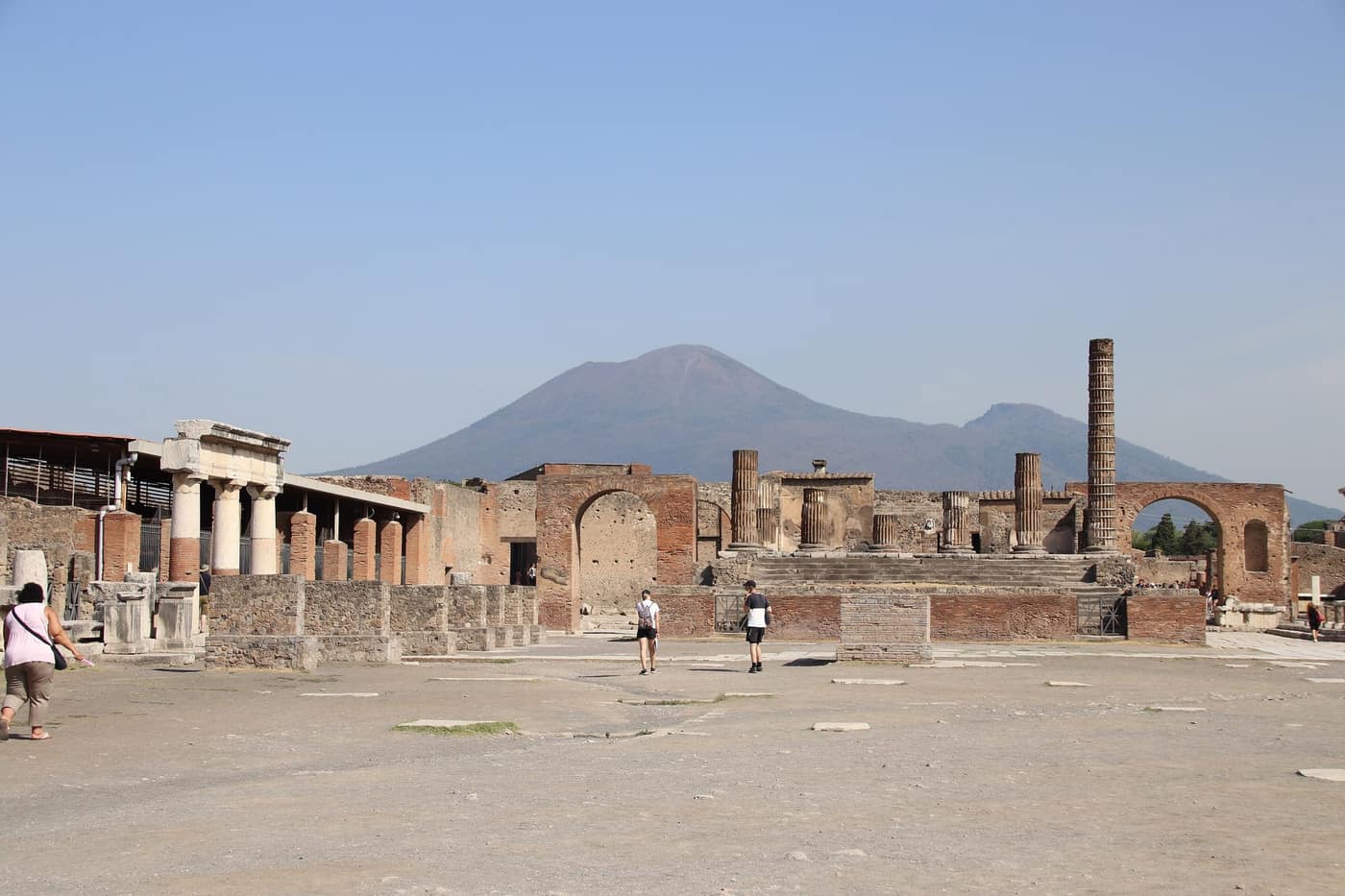
Is Vesuvius active?
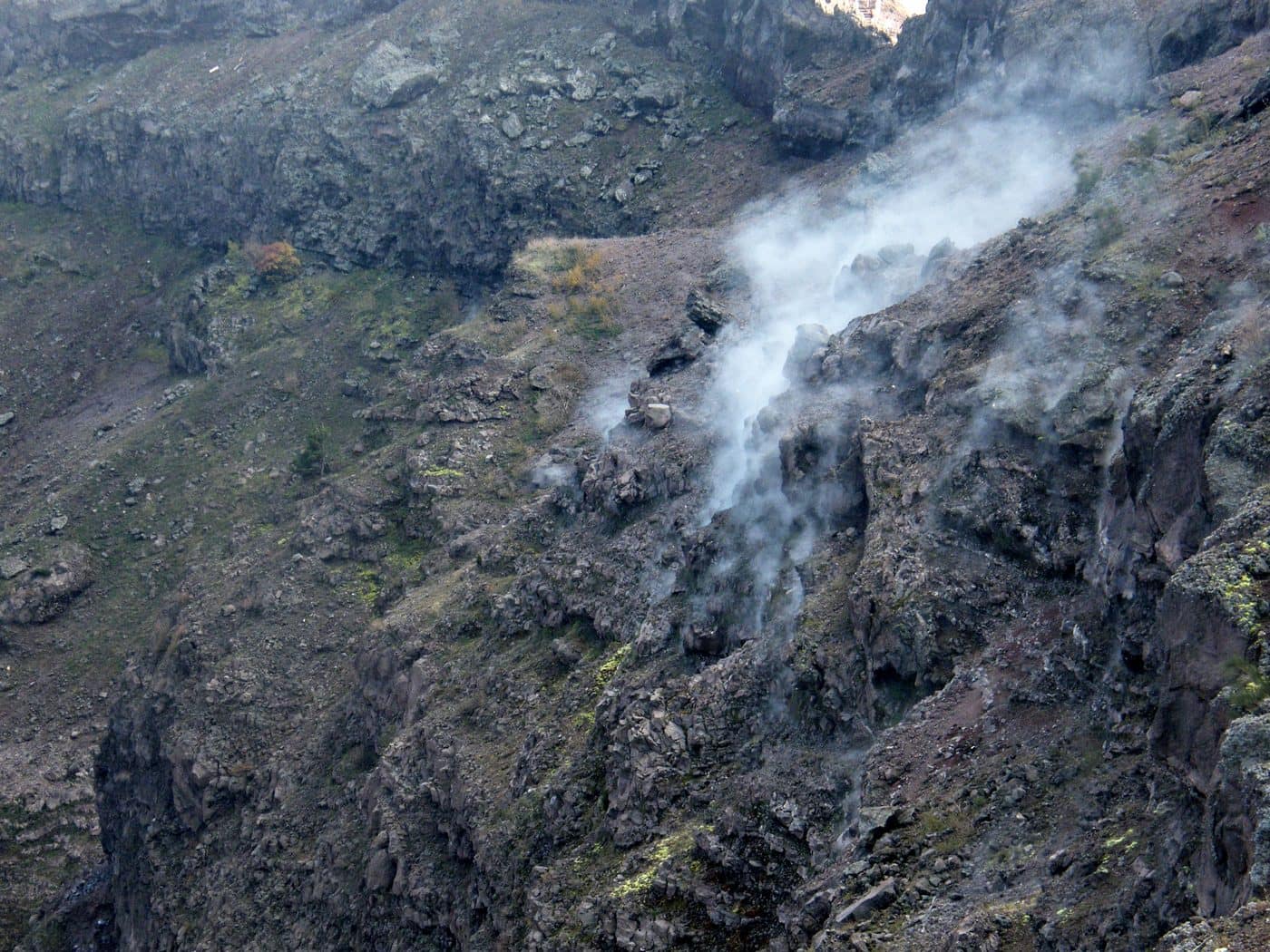
Active, yes. Erupting, no. The park and the volcanologists describe its present state as quiescence: the conduit is blocked, magma sits in a chamber at depth, and the surface shows fumaroles and low seismicity. The Civil Protection's page on Vesuvius says no precursors of a short-term return to eruptions have been recorded.
Vesuvius is currently quiescent, or dormant. It has not erupted since 1944, but it can erupt again. The most likely next event, by the studies the Civil Protection cites, is a violent Strombolian eruption; the national emergency plan is written for a larger sub-Plinian event of the 1631 type.
The Osservatorio Vesuviano in Naples, a section of the national geophysics institute INGV, monitors it 24 hours a day with seismic, ground-deformation and gas networks. Monitoring tracks changes in the volcano; it cannot give a certain date for the next eruption, as the Civil Protection's own page on forecasting explains.
About 700,000 people live on its slopes, the Civil Protection says, which makes it one of the highest-risk volcanoes in the world.
The national plan's red zone covers areas threatened by pyroclastic flows or roof collapse under volcanic deposits; the yellow zone outside it is exposed to substantial ash fall. Pompei and Ercolano are in the red zone. The plan is written for a change in alert level, and the level is public.
Current volcanic alert: green. Source: Italy's Civil Protection, last read .
- Green ordinary activity, no significant change in monitored parameters
- Yellow significant changes in monitored parameters; attention phase
- Orange further changes; pre-alarm phase
- Red pre-eruptive signs; alarm phase, with preventive evacuation of the red zone
The Department of Civil Protection sets the level with the Campania Region, on the advice of the Commissione Grandi Rischi and the monitoring centers; its table of levels (PDF) has the definitions. Alert levels describe the volcano's condition; follow the authorities' instructions for the operational response.
Dipartimento della Protezione Civile, "Vesuvio" (Italian); Vesuvius National Park, "Geologia e Vulcanologia"; INGV, "Somma-Vesuvio".
When did Vesuvius last erupt, and when before that?
1944, the last one
Lava flows and ash. From the path, look for the 1944 lava in the Atrio del Cavallo below the cone, covered in gray-silver lichen, the park says. It closed a period that had begun in 1631, when the volcano erupted often, mostly with little energy.
1631, the big modern one
It ended a rest of almost five centuries, the Civil Protection says, and opened three hundred years of frequent eruptions with short pauses. The national emergency plan uses a sub-Plinian event of the 1631 type as its reference scenario.
79 AD, Pompeii and Herculaneum
The eruption that buried Pompeii under ash and lapilli and Herculaneum under pyroclastic flows, and reshaped the Somma caldera in which today's cone later grew. It buried the ancient towns in volcanic material; the excavations are what was dug out of it.
INGV, "Somma-Vesuvio": last eruption 1944, the 1631 and 472 AD sub-Plinian eruptions, 79 AD as the last Plinian one; park, "Il Gran Cono" on the 1944 lava seen from the path.
How high is Vesuvius, and where exactly is it?
1,281 m above sea level at the summit, by INGV's measurement.
The crater path doesn't reach that point: its highest stretch is at 1,175 m, the park says, on the rim with the crater on one side and the Bay of Naples on the other. The older mountain around it, Monte Somma, rises to 1,132 m at Punta Nasone and is about 15 km across at the base.
It stands on the eastern shore of the Bay of Naples, less than 12 km south-east of the city of Naples and about 10 km from Pompei, the Civil Protection says, above Ercolano and Torre del Greco.
From the Forum in Pompeii the cone stands due north; from the rim you look down on the bay and the towns. The Vesuvius National Park covers the volcano; the crater entrance is at Quota 1000, above Ercolano, where the road ends.
Choose your route to Quota 1000: an EAV bus from Pompei Villa dei Misteri station, a taxi or shuttle from Ercolano Scavi station, or a car to the car park below the square and the €1-per-ride shuttle from there. All three are on the Vesuvius tickets page; our Pompeii map shows Villa dei Misteri station beside the archaeological site.
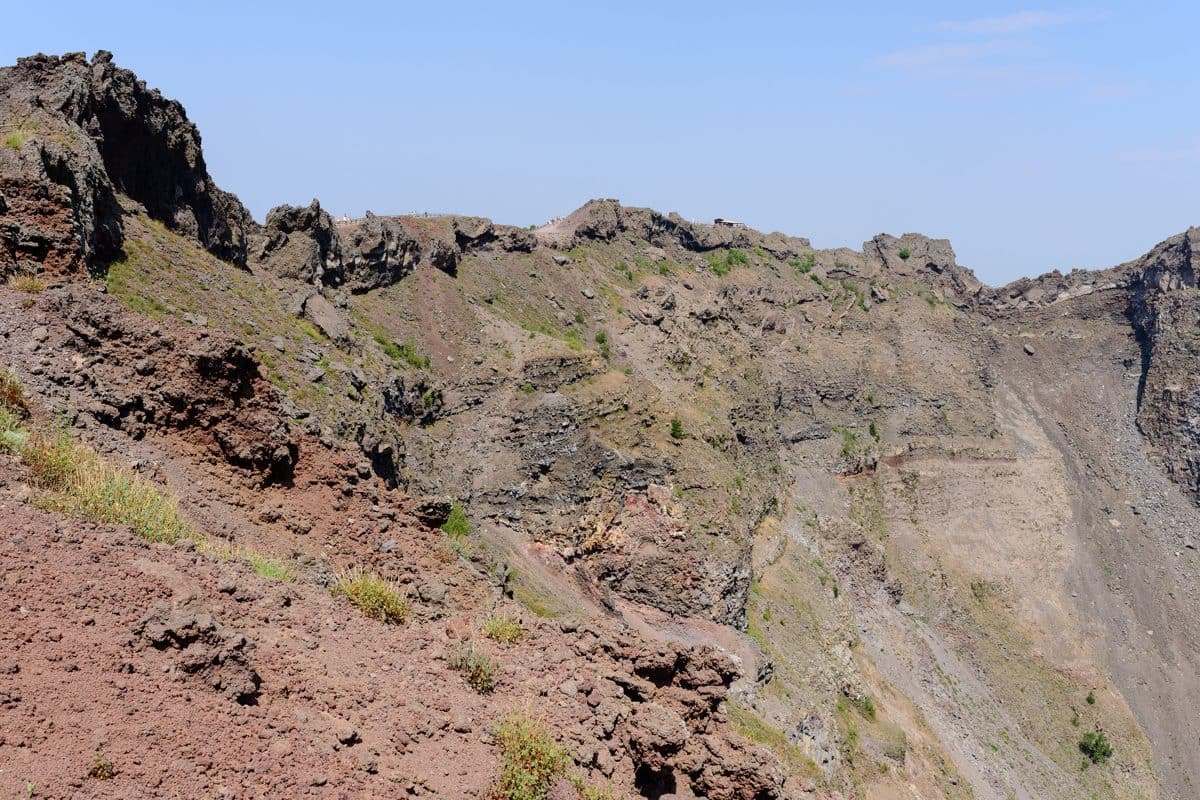
INGV, "Somma-Vesuvio": 1,281 m; park, "Il Gran Cono": path 4,010 m, top 1,175 m, 2.5 hours; park, "Geologia e Vulcanologia": Monte Somma 1,132 m, base about 15 km.
Can you climb Vesuvius?
- Check the alert and the park's notices first. The volcanic alert is on this page; weather alerts are separate: an orange or red weather alert from the Civil Protection closes the route automatically, and other closures are possible. The park posts them in its access notices.
- Buy online before you go up. Tickets are not sold at the entrance. The park's rules list a €10 base ticket; its only authorized seller, Vivaticket, advertises €11.68 full and €9.55 reduced. 360 people an hour in groups of 20; entry from 120 minutes before to 120 minutes after the time on the ticket, within opening hours. Slots, last entry by month and the rules.
- Get to Quota 1000. Bus from Pompei Villa dei Misteri, taxi or shuttle from Ercolano Scavi, or the car park and the €1-per-ride shuttle. Nothing drives beyond the square.
- Walk the open section of the Gran Cono path. The park lists 4,010 m and about 2.5 hours for the full route, highest point 1,175 m, rated easy though it climbs: a wide track of volcanic gravel with switchbacks, then the rim. Its page says the full ring is not walkable while safety works continue, and names the Capannuccia at 1,170 m as the near goal. Proper shoes; no toilets at the top square.
Vesuvius National Park, "Il Gran Cono", including its access rules; tickets at vesuviopark.vivaticket.it.
Pompeii and the crater in one day with a tour?
Our selection →The shared days from Naples, Sorrento and Rome do both, with the crater ticket and the Pompeii ticket in the price on the ones we chose. Five compared, by which site comes first and how long you get at the top; the same tours filtered from Naples and from Sorrento, and the volcano alone in Mount Vesuvius tours.
Option records and source listings are linked in our Pompeii and Vesuvius selection; Viator data from September 19 and 20, 2026.
Before you go
Will Vesuvius erupt again?
It can erupt again. The Civil Protection's current assessment reports no precursors of a short-term return to eruptions and gives no date for the next one; the volcano is monitored 24 hours a day.
What is the alert level today?
green, at our last check of the Civil Protection's Vesuvius page, dated in the byline above. Green is the base level of four; yellow, orange and red follow. Our check runs twice a day with the other sources on this site.
How tall is Vesuvius?
1,281 m above sea level, INGV says. The path stops at 1,175 m on the rim. Monte Somma, the older half-ring behind it, reaches 1,132 m.
Can you see into the crater?
Yes, from the permitted rim path. The park describes fumaroles on the inner walls of the crater. You can't go down into it.
Is there a cable car or a lift?
No. The only way to the crater is on foot from Quota 1000, the park says; the road ends there, and the €1 shuttle runs only between the car park and the square.
Is it safe to visit?
Check the current volcanic alert and the park's access notices before you travel. Green describes the volcano's ordinary activity; it does not confirm that the trail is open. Orange or red weather alerts close the route automatically, and other closures are possible.
How far is Vesuvius from Pompeii?
About 10 km, the Civil Protection says. From Pompeii, the park lists an EAV bus from Pompei Villa dei Misteri station to Quota 1000. If you book a tour, check whether it visits only Vesuvius or combines both sites.
Can I do Pompeii and Vesuvius in one day?
Yes, if the crater slot and your transport leave time for both. The crater's last entry is 15:00 to 18:00 depending on the month; Pompeii admits until 17:30 from March 16 to October 14. Last entry by month.
Protezione Civile, "Vesuvio"; INGV, "Somma-Vesuvio"; park, "Il Gran Cono".